
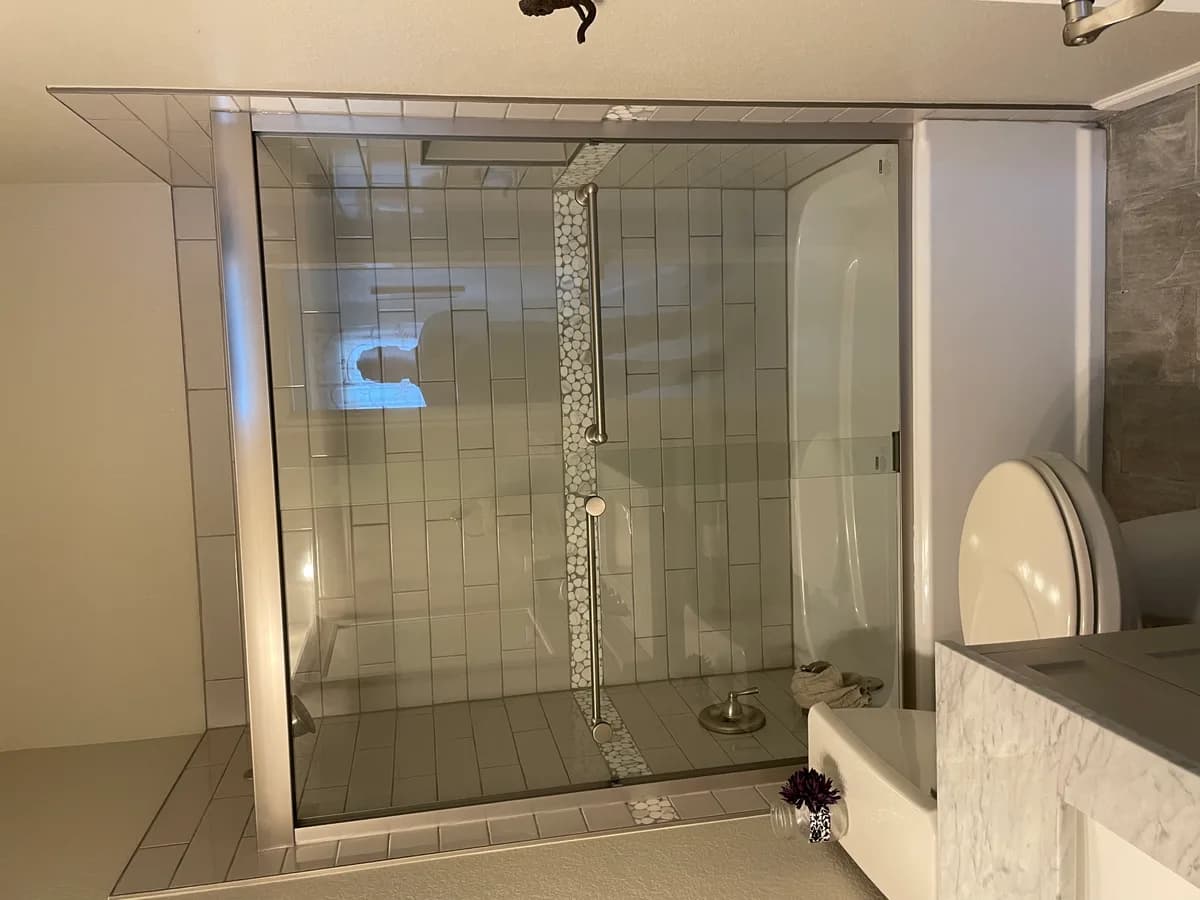
Tile is the most permanent decision in any bathroom renovation. Unlike paint, you can't change it on a weekend. A bad tile choice — wrong size, wrong finish, wrong grout color — is something you'll live with for 10–15 years. So it's worth thinking through before you buy.
Here's what we tell Hamilton County homeowners when they ask how to choose tile.
Start With the Floor, Not the Wall
Floor tile has the most constraints:
- Slip resistance — measured by the Coefficient of Friction (COF). For wet areas, look for a COF of 0.60 or higher. Polished stone and large-format glossy tiles are beautiful but dangerously slippery when wet.
- Durability — floor tile takes foot traffic, dropped things, and constant moisture. Porcelain is the most durable option. Ceramic works in most homes. Natural stone requires sealing and more maintenance.
- Grout lines — more grout lines mean more traction on a wet floor, which is why mosaic tile (small tiles with many grout joints) is so popular in shower floors.
Once you've chosen floor tile, let it guide the walls. Matching or complementary wall tile, not competing.
Tile Material Comparison
Ceramic — Affordable, easy to cut, and available in every style. Best for walls and lower-traffic floors. The glaze can chip on heavily used floors over time.
Porcelain — A type of ceramic fired at higher temperatures. Denser, harder, less porous, and more durable than standard ceramic. More expensive, slightly harder to cut. The right choice for most floor applications.
Natural Stone (Marble, Travertine, Slate) — Beautiful and unique. But it requires sealing on installation and re-sealing periodically. Marble stains and scratches more easily than porcelain. In a shower, natural stone needs a quality sealer and regular maintenance — without it, you'll have water infiltration problems.
Glass — Popular for backsplashes and accent strips in showers. Not suitable for floors. Can be slippery and chips if a heavy object hits it. Adds light and visual depth.
Subway Tile — Not a material, but a shape (3×6 rectangles). Usually ceramic or porcelain. Classic, versatile, and rarely looks dated. One of the best-value choices for a timeless bathroom.
Size and Scale
The size of the tile changes how a space feels:
- Small rooms: Large-format tile (12×24 or larger) with minimal grout lines can actually make a small bathroom feel larger — fewer lines mean less visual busyness.
- Large rooms: Small mosaic tile adds texture and detail that would feel lost in a large format.
- Shower floors: Keep it to 4×4 inches or smaller for adequate slip resistance and drainage pitch.
- Vertical walls: Running a 4×12 or 4×16 tile vertically makes ceilings feel higher.
Finish: Matte vs. Polished
Matte/satin: Hides water spots and soap scum more easily. Shows less glare. Better traction. The practical choice for everyday-use bathrooms.
Polished/glossy: Reflects light and looks elegant. Shows every water drop, fingerprint, and smear. Requires more wiping to maintain. Better suited to backsplashes and feature walls than floors.
Grout Color: The Decision Most People Underestimate
Grout color changes the whole character of a tile installation:
- Matching grout (same as tile color) makes the tile pattern recede and gives the surface a uniform look.
- Contrasting grout (dark grout with white tile, for example) emphasizes the grid pattern and makes the layout bolder.
- White grout looks crisp at installation. In a shower, it will discolor without regular sealing and cleaning.
- Medium gray is the most forgiving — it doesn't show staining as dramatically as white, and it works with almost any tile.
A Note on Buying Extra
Always buy 10–15% more tile than your measured square footage. Tile is cut during installation (corners, outlets, trim pieces), some pieces break, and dye lots change. If you need to replace a cracked tile two years later, matching the original dye lot is nearly impossible.
If you have tile you love and want it installed right — straight lines, proper waterproofing, clean grout — reach out to Ark Handyman. We bring the tools; you bring the tile.