
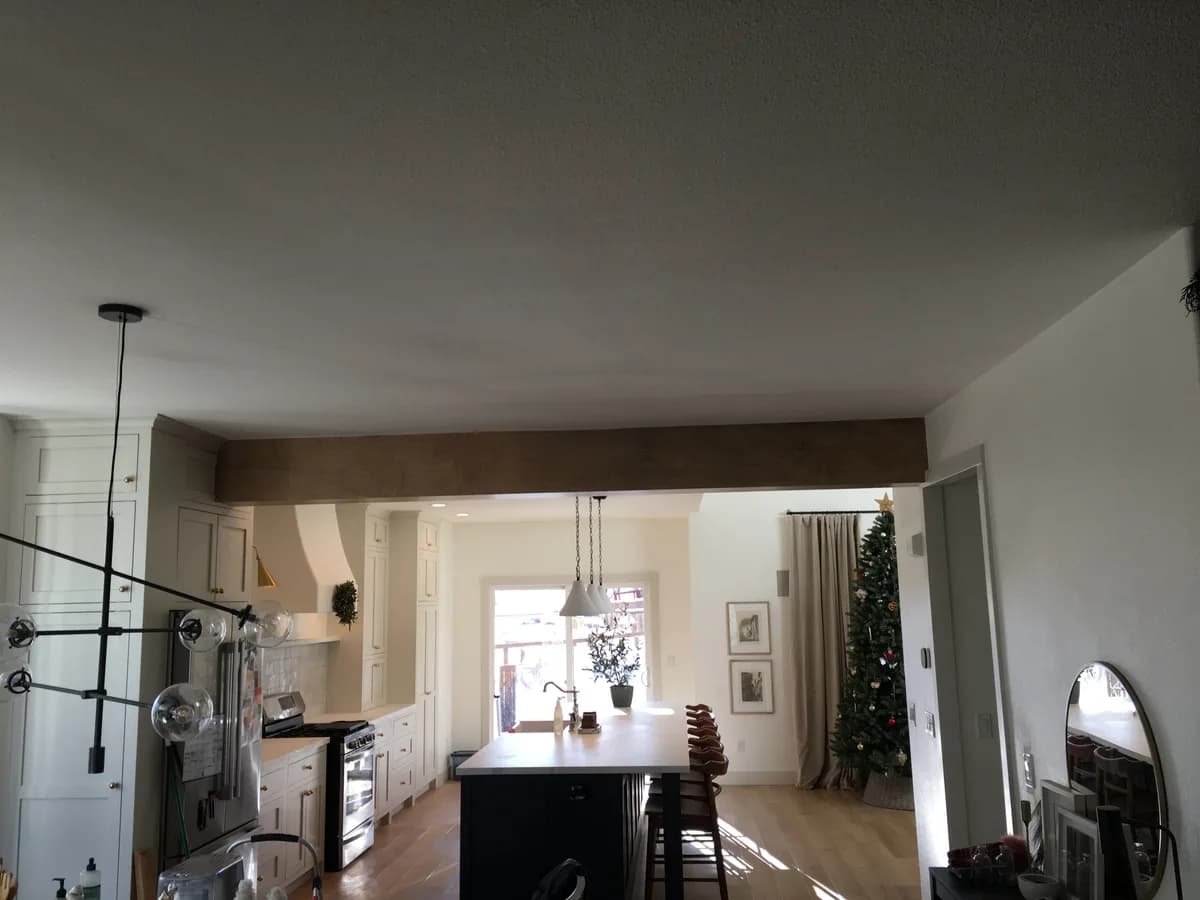
A fresh coat of paint is the single cheapest and fastest way to transform a room. But walk through enough homes and you start seeing the same problems everywhere — drips frozen in place, roller lines on the ceiling, paint that peels after a year. None of it is the fault of the paint itself. It's technique and prep.
Here are the five mistakes that ruin an otherwise good paint job.
1. Skipping Surface Prep
This is the biggest one. Paint is a finish coat — it reveals every flaw underneath it, it doesn't hide them. Holes, dents, cracks, old patches, and dirty walls all need to be addressed before a brush ever touches the surface.
What to do instead:
- Fill all holes with lightweight spackle and sand flush.
- Wipe walls down with a damp cloth (TSP solution for greasy areas like kitchens) to remove dust, grease, and any residue that will prevent adhesion.
- Lightly sand glossy surfaces so the new paint has something to grip.
Skipping prep is how you end up repainting a year later.
2. Not Priming
Paint and primer are different products. Primer seals porous surfaces, blocks stains, and gives paint something to bond to. "Paint and primer in one" products are fine for walls that are already in good shape — they're not a substitute when you're painting over:
- Repaired drywall or spackle
- Raw wood
- Dark colors you're trying to cover with light ones
- Stains from water damage, smoke, or markers
In these cases, use a dedicated primer first. It takes an extra hour and saves you two additional finish coats.
3. Loading the Brush or Roller Too Much
The instinct is to get as much paint on the wall as possible per stroke. The result is drips, heavy roller lines, and uneven texture.
For brushes: Dip only the bottom third of the bristles into the paint, then tap (don't wipe) against the inside of the can to remove excess. You want the brush loaded but not dripping.
For rollers: Roll out the excess on the top section of the roller tray before applying to the wall. Apply with a consistent "W" or "M" pattern, then back-roll lightly to even out the coverage without adding more paint.
Two thin coats always look better than one heavy coat.
4. Painting Over Wet or Cold Surfaces
Paint needs certain conditions to cure properly. Most latex paints require:
- Surface temperature above 50°F
- Relative humidity below 85%
- Surface completely dry (not just surface-dry — moisture trapped behind the surface will bubble up)
In Tennessee, summer humidity is a real consideration for exterior work. On interior jobs, make sure previous coats are fully dry before adding the next one. "Dry to the touch" in 2 hours doesn't mean you should recoat in 2 hours — check the label for recoat times, which are often 4–6 hours for full cure.
5. Cutting In Without Feathering
"Cutting in" means using a brush to paint the edges — corners, ceiling lines, around trim — before rolling the main field. The mistake is applying a thick, distinct line of brush marks and then rolling right up to it. The brush area and the rolled area have different textures, and in certain lighting you'll see a visible seam around every edge.
The fix: Cut in a section, then immediately roll that section before the cut-in edge dries. This lets the two areas blend together while still wet ("wet edge" technique). Never let the cut-in fully dry before rolling.
A good paint job is 70% prep and technique, 30% paint quality. If you'd rather just have it done right, give us a call — we handle everything from prep to cleanup.